Certain indoor plants shed baggage when winter hits, much like reasonable people shed their social obligations. It’s a clever move, and they’re perfectly fine.
There is a difference between a dead stem and a smart survivalist conserving energy. All you need is to learn more about biological budgeting.
The 11 Bald and Beautiful Houseplants

While many put on festive layers, these plants prefer to strip down to the bare essentials. Do not follow in their footsteps, please.
1: Weeping Fig

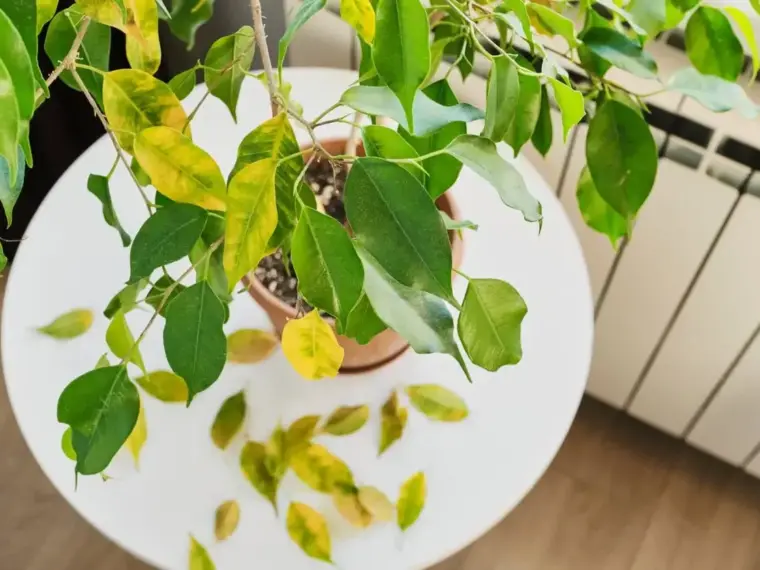
Touch a leaf and this plant files for a restraining order. Ficus trees treat minor drafts like a personal attack, shedding foliage the moment you adjust the thermostat or look at them sideways.
Stability remains their only love language, so pick a permanent corner and prepare for a temporary (!) bald patch.
Quick note: I used to think my weeping fig hated me, so I kept moving it around trying to “fix” the leaf drop. It only got worse. Once I stopped relocating it and left it alone, the leaves came back on their own.
2: Croton

Vibrant colors usually mask a high-maintenance soul. Crotons require humid air, steady warmth and bright light, yet winter brings the exact opposite. Expect a colorful carpet on your floor as these plants protest the dry, radiator-blasted air of January.
3: Calamondin Orange

Citrus trees belong on sun-soaked patios and nowhere else. Obviously, your orange tree feels claustrophobic inside a dim corner.
It dumps green leaves entirely because it doesn’t get enough fuel to stay functional. Push it near a south-facing window to orange for a brighter outlook.
4: Tropical Hibiscus

To you, dragging a tropical hibiscus inside is a heroic rescue mission. Your hibiscus instead feels planthandled. It sheds every leaf to signal utter displeasure with the sudden change in light.
Prune the lanky branches back and trust the dormant roots to keep the spark alive until May.
Quick tip: The first time this happened to me, I thought my hibiscus was a goner. I almost tossed it. I’m glad I didn’t! It came back strong once it went back outside in spring. Just be careful not to panic-prune or overwater a leafless hibiscus.
5: Rubber Plant

Overwatering kills more rubber plant than any winter chill ever could. Slower growth means the soil stays swampy for weeks, leading to a yellowing, sad, and soggy descent of bottom leaves.
Ignore the pot until the dirt resembles the Sahara… just kidding! Wait until the top few inches of soil are completely dry. to keep the remaining canopy intact.
6: Poinsettia

Most people treat Poinsettias like disposable decor, which immensely hurts their feelings. A single gust of cold air from an open door or window sends them into a leaf-dropping frenzy. Keep them away from the Arctic blast of the entryway if you want that red flair to last past New Year’s Day.
Quick tip: I used to place poinsettias right by the window for more light, not realizing how cold the glass gets at night. Moving it just a little farther back made a huge difference.
If your poinsettia is already dropping leaves, I also go into much more detail in my article on why poinsettia leaves fall off and how to save the plant.
7: Boston Fern

Radiators can turn them into crispy tragedies within hours. Ferns thrive on moisture and humidity, making the dry winter air their ultimate nemesis. Relocate yours to a humid bathroom to prevent your rug from becoming a graveyard of tiny fronds.
8: Snake Plant

Snake plant leaves rarely fall off unless you have been far too generous with the watering can. Rot starts at the base, causing their structural swords to topple over into a mushy mess. Forget it exists for a month, and it will likely reward you by staying upright.
Quick tip: In my experience, snake plants handle drought far better than wet soil. When in doubt, I skip watering.
Snake plants aren’t alone here, I also recommend you to take a look at Rita’s article about several other houseplants that need a watering break in winter.
9: Jade Plant

Darkness serves as a signal for the jade to abandon its water-filled leaves. Without sufficient sun and too much water, the plant decides it can no longer support its own weight. Find the brightest spot in the house and ease up on watering, and watch the shedding stop as it enters its winter diet phase.
10: Money Tree

Wealth usually comes with stress, and the Money Tree is no exception to the rule. Fluctuating temperatures from heating vents cause the braided trunk to shed its canopy in a display of financial (and biological) instability.
Maintain a consistent environment and easing up on watering in winter to keep your fortune from collapsing.
Quick tip: If a money tree drops leaves in winter, I check for drafts and wet soil first. One of those is almost always the culprit.
11: Spider Plant

Older foliage eventually hits its expiration date to make room for fresh growth. Winter simply fast-tracks this process because your plant prefers hoarding energy in its core rather than supporting ancient leaves. Snip the brown bits with sharp scissors and appreciate the minimalist makeover.
Quick reminder: I used to think brown tips meant I was doing something wrong. With spider plants, I’ve learned it’s often just age, especially in winter.
If you’re unsure how often to water anything this time of year, I also recommend checking my houseplant winter watering schedule to avoid guessing and making things worse.
The Helpful Human Syndrome

Most winter leaf loss stems from our own misguided urge to nurture. We see a naked branch and assume the plant needs a five-course meal or a drown-level drink.
- Halt the fertilizer until spring, because dormant roots cannot digest extra nutrients. Force-feeding a sleeping plant will cause chemical burns, and nobody wants a leafy roommate with indigestion.
- That aside, dry air is the silent assassin of the fern world. If your skin feels like old parchment, imagine how your Croton feels. You do not need an expensive humidifier that looks like a space pod. Group your plants in a leafy huddle. They create their own tiny microclimate, sharing humidity like rumors at a high school reunion.
- Wipe your windows too. Dust acts like a blackout curtain for your greenery. Every photon counts when the sky looks like a wet wool blanket for three months straight.
And since you’re already cutting back on feeding, you might want to take a look at my article on which houseplants you can fertilize in winter and which ones are better left alone.
Spring is Coming (Eventually)

Do not panic, even if your living room currently resembles an autumn forest floor. A bald plant usually hides a healthy heart, provided you stop pestering it with kindness it didn’t ask for.
Most species will bounce back once the spring sun returns to do what they do best. Nothing. Until then, keep the heater distant and the watering can mostly empty.
If you still feel the urge to do something, I also recommend propagating a few easy houseplants from cuttings instead of hovering over dormant ones!