How to PGrowing carrots at home can be incredibly rewarding, but many gardeners struggle with uneven spacing, crowded seedlings, and poor germination. Tiny carrot seeds are difficult to distribute evenly, which often leads to thinning later and wasted seeds.
Fortunately, there’s a simple gardening hack that professional growers and home gardeners alike are starting to use: egg cartons. These everyday household items can act as natural planting templates that help create perfectly spaced carrot rows, improve soil aeration, and make planting faster and easier.
In this guide, you’ll learn two easy egg carton methods for planting carrots, plus expert tips to maximize germination and harvest bigger, straighter roots.
Why Use Egg Cartons to Plant Carrots?
Egg cartons are surprisingly effective garden tools. Their evenly spaced cups create consistent planting holes, which helps carrots grow with proper spacing.
ADVERTISEMENT
Key Benefits
- Perfect seed spacing without complicated measuring
- Less thinning required after germination
- Improved root development and straighter carrots
- Eco-friendly recycling method for gardeners
- Faster planting for large vegetable beds
Because carrots need loose soil and adequate spacing to develop properly, using egg cartons can significantly improve your harvest.
Method 1: The Egg Carton Hole Marker Technique
This is the easiest and most popular method used by home gardeners.
Step-by-Step Guide
1. Prepare the Garden Bed
Carrots grow best in loose, well-drained soil. Remove rocks and break up clumps to prevent crooked roots.
Adding organic compost or garden soil conditioner improves soil structure and boosts germination.
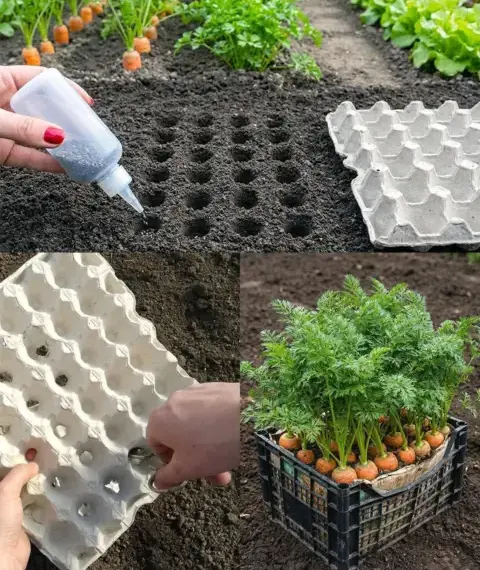
2. Press the Egg Carton Into the Soil
Take an empty cardboard egg carton and press it gently into the soil surface.
This creates perfectly spaced indentations that act as planting holes.
Spacing is usually about 1–2 inches apart, which is ideal for most carrot varieties.
3. Plant the Seeds
Drop 1–2 carrot seeds into each indentation.
Cover lightly with fine soil or compost.
Carrot seeds should be planted very shallow—about ¼ inch deep.
4. Water Gently
Use a watering can with a soft spray to avoid disturbing the seeds.
Keep soil consistently moist during germination.
Carrots usually sprout within 7–14 days depending on temperature.
Method 2: The Biodegradable Egg Carton Seed Starter
The second method is excellent for gardeners who want strong early seedlings.
How It Works
Instead of marking holes, the egg carton becomes a mini biodegradable seed tray.
Steps
- Fill each egg cup with seed-starting soil mix
- Plant one carrot seed per cup
- Keep moist and place in sunlight
- Once seedlings appear, cut the cups apart
- Plant the entire cup in the garden
Because cardboard cartons are biodegradable, they break down naturally in the soil.
This technique works well for early spring planting or cooler climates.
Best Soil Conditions for Growing Carrots
Carrots thrive in light, sandy, well-drained soil.
Ideal Soil Conditions
- Soil pH: 6.0–6.8
- Loose texture without stones
- High organic matter
- Consistent moisture
Adding compost or organic fertilizer improves soil structure and increases yields.
Tips for Growing Bigger and Straighter Carrots
Professional gardeners often use these techniques to maximize carrot production.
1. Thin Seedlings Early
If multiple seeds sprout in one spot, thin them to one plant per hole.
This prevents overcrowding and ensures strong root development.
2. Keep Soil Moist
Carrots require consistent moisture during early growth.
Dry soil can cause poor germination or misshapen roots.
Mulching with straw or compost helps retain moisture.
3. Avoid Heavy Fertilizers
Too much nitrogen encourages leaf growth instead of roots.
Use balanced organic vegetable fertilizer sparingly.
4. Loosen Soil Deeply
Carrot roots grow deep. Loosen soil at least 10–12 inches before planting.
This prevents twisted or forked carrots.
Best Carrot Varieties for Egg Carton Planting
Some carrot varieties perform better in home gardens.
Recommended Types
- Nantes carrots – sweet and fast growing
- Danvers carrots – excellent for heavier soils
- Imperator carrots – long supermarket-style roots
- Little Finger carrots – perfect for containers
These varieties adapt well to the egg carton spacing technique.
Common Mistakes to Avoid
Even simple methods can fail if these issues occur.
Planting Too Deep
Carrot seeds are tiny and should be planted shallowly.
Poor Soil Preparation
Hard or rocky soil causes forked roots.
Overwatering
Waterlogged soil can cause seed rot and poor germination.
Why This Gardening Hack Is Going Viral
Social media and gardening communities love simple DIY techniques that deliver real results.
The egg carton method has become popular because it:
- Saves time during planting
- Reduces seed waste
- Produces straight, evenly spaced carrot rows
- Uses recycled materials
For beginners and experienced gardeners alike, it’s one of the easiest vegetable gardening tricks available.
Conclusion
Planting carrots doesn’t have to be frustrating. With a simple egg carton, gardeners can create perfectly spaced rows, improve germination, and grow healthier roots with minimal effort.
Whether you use the hole-marking technique or the biodegradable seed starter method, this easy gardening hack can transform the way you plant carrots.
By combining proper spacing, good soil preparation, and consistent watering, you’ll be rewarded with larger, straighter carrots and a more productive vegetable garden.
Gardening Disclaimer
This article is for educational purposes only. Growing conditions vary depending on soil type, climate, and region. Always adapt gardening techniques based on your local environment and consult local agricultural experts when necessary