My mower belongs in a museum, not a garage. And yet, until a few years ago, I really thought it would come in handy one day. It didn’t. I was given a packet of teeny-tiny seeds that changed my little landscape… and my weekend routine.
No Mow Struggle Ever

I see most of my neighbors transitioning from traditional turf to ground covers. I think it’s partly about looks, but mostly about reclaiming their Saturday from a loud, thirsty, and ultimately ungrateful green lawn.
I’ve joined them, almost by accident. What started small turned into a full shift! Now a lot of homes on my block are trading noisy, sunburned, and patchy struggles for low-growing plants that mostly take care of themselves.
Our plants stay short and green, and, most importantly, they don’t demand a weekly haircut. The best part is the sweet perfume rising from every footstep, which sure beats the smell of gasoline and sweat on a summer afternoon.
1. Irish Moss (USDA Zones 4-8)

Emerald mounds thrive best in USDA Zones 4-8, which feels like a personal snub since my garden is in zone 9. I’d need to provide it with partial shade and consistently moist, well-draining soil or the plant would suffer in my giant air fryer of a yard.
I imagine it feels like walking on a soft cloud, but gardeners who grow it successfully suggest keeping foot traffic light. It’s more of a visual carpet than a play surface.
One thing to watch, especially in humid parts of the U.S., is drainage. Heat combined with soggy soil is the real enemy, that’s what leads to crown rot pretty quickly. Good airflow and sharp drainage make all the difference.
Quick note: Irish moss isn’t considered invasive, and it’s generally non-toxic to dogs and cats, making it a safe choice for ornamental areas.
2. Microclover (USDA Zones 3-10)

I love how this low-growing clover fixes nitrogen, which naturally improves the soil over time. It stays remarkably green during dry spells that usually stress standard fescue.
It also handles moderate foot traffic. My neighbor’s dogs run across it daily without leaving a single bare patch, which honestly surprised me.
Just be ready for bees. Even though they don’t bloom as much as the traditional white clover, when those tiny blossoms appear, they’ll attract pollinators all summer long.
Quick note: Microclover isn’t considered invasive, but it does spread steadily. It’s also generally non-toxic to pets.
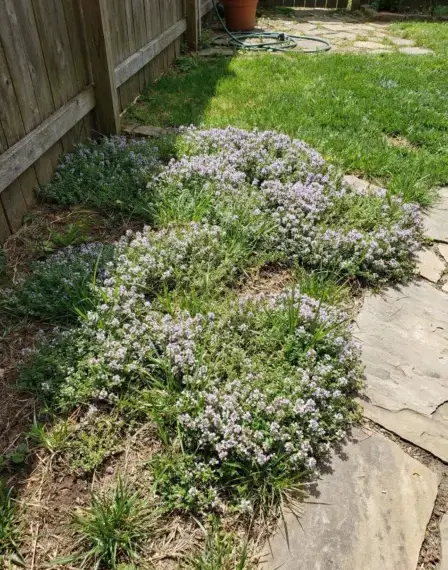
3. Creeping Thyme (USDA Zones 4-9)

You should plant this in full sun if you want that dense purple carpet effect. In my experience, the more sun it gets, the better it blooms. Once established, it survives intense heat and is generally deer-resistant thanks to its essential oils.
I’ve found it works wonders for water-starved yards like mine, and it can handle light to moderate foot traffic. The only real downside is the slow growth. It takes time to spread, so you’ll need to pull weeds until the mat finally closes. After that, maintenance drops off quite a bit.
Quick note: Creeping thyme isn’t considered invasive, and it’s generally non-toxic to pets. It spreads steadily but is easy to manage with simple edging.
And if you prefer a softer border look, we explain how to use low-growing ornamental grasses along garden edges in another guide.
4. Corsican Mint (USDA Zones 6-9)

I like using this as a soft filler for those annoying bare spots where my lawn gave up. It stays incredibly low to the ground and best suits yards in USDA Zones 6-9, especially in areas with some afternoon shade.
Every time you brush against it, it releases a sharp peppermint scent, which is honestly my favorite part. It handles only light foot traffic, so it works best as a sensory ground cover between stepping stones or along pathways.
Just don’t get too comfortable, because its fragrance comes at a price: consistently moist soil. If the soil dries out for long in hot weather, it declines quickly.
Quick note: Corsican mint isn’t considered invasive, but it can spread steadily in ideal conditions. It’s generally non-toxic to pets, though like most mints, it can cause mild stomach upset if chewed in large amounts.
5. Silver Carpet (USDA Zones 9-11)

This South African native creates a rugged, silvery mat that thrives in the kind of heat that usually fries traditional lawns in USDA Zones 9-11. Once those roots anchor deep, it becomes very drought-tolerant, so you can finally ghost your garden hose.
This one stays remarkably flat, so it’s pretty good at suppressing most of those stubborn weeds once it fills in. It also handles light foot traffic well, which makes it useful between stepping stones or in sunny front yards.
Cold is where it draws the line. It can tolerate light frost, but it won’t survive prolonged hard freezes or harsh winters.
Quick note: Silver Carpet (Dymondia) isn’t considered invasive, and it’s generally regarded as non-toxic to pets.
If weed control is your main goal, we also put together a guide on fast-growing groundcovers that keep weeds in check.
6. Kurapia (USDA Zones 7-10)

I’ve discovered this patented hybrid is about as close as I’ve found to a low-effort lawn alternative. Once established, it needs about 50 to 60% less water than traditional turf under similar conditions.
It spreads densely and stays low, creating a tight mat that crowds out many weeds once it fills in. It handles light to moderate foot traffic well, great for backyard lounging and everyday walking zones.
The flowers are sterile, meaning it doesn’t produce viable seed, so you won’t have to worry about it reseeding all over the yard. It still produces pollen, though, so it’s still a great option to attract pollinators.
Plugs are expensive initially, but the saved labor is worth every penny.
Quick note: Kurapia isn’t considered invasive, and it’s generally regarded as non-toxic to pets. It spreads by roots rather than seed, which makes it easier to control with defined edges.
7. Blue Star Creeper (USDA Zones 6-9)

You can use this flowering ground cover to fill gaps between your heavy stone pavers or along pathways. It tolerates light to moderate foot traffic and remains lively in filtered sunlight or partial shade.
Consistently moist soil fuels this quick spreader until it fills in every brown patch in sight. It’s a steady grower, especially in mild climates.
That said, it can wander beyond where you plant it. So, guard your borders carefully and be ready to trim it back, or it will happily creep into neighboring plants.
Quick note: Blue Star Creeper (Isotoma fluviatilis) isn’t considered invasive at the federal level in the U.S., but it spreads readily in ideal conditions. It’s generally regarded as non-toxic to pets.
8. Roman Chamomile (USDA Zones 4-9)

Roman Chamomile loves my gritty soil and full sun exposure (plenty of it in zone 9). I planted this ground cover to keep my garden green and fragrant through every season.
It releases a soft apple-like scent when brushed against, which makes it feel more like a living herb carpet than a typical lawn substitute. It handles light foot traffic, but it’s not meant for heavy daily use.
You won’t need a mower because this slow grower only needs a rare tidy-up. A light trim once or twice a season usually keeps it looking tidy.
Quick note: Roman chamomile (Chamaemelum nobile) isn’t considered invasive, but it can self-spread in ideal conditions. It’s generally regarded as non-toxic to pets.
9. Stonecrop (USDA Zones 3-9)

Rely on these succulents for rocky slopes where the soil is terrible or barely there. Stonecrop’s fleshy leaves store water, which helps it shrug off punishing heat and dry stretches once it’s established.
You can skip the fertilizer and chemical sprays, too, because this plant is perfectly content lean, well-draining soil and it’s rarely bothered by pests. In fact, too much rich soil can actually make it floppy.
It handles light foot traffic at best, but many varieties have brittle stems that snap under real pressure, so it’s better suited for ornamental areas than active walkways.
Quick note: Most common stonecrop varieties (Sedum species) aren’t considered invasive and are generally regarded as non-toxic to pets, though mild stomach upset can occur if large amounts are eaten.
10. Sweet Woodruff (USDA Zones 4-8)

If you live in USDA Zones 4-8, plant it in deep shade to help stabilize a tricky backyard bank or fill in under trees where grass refuses to grow.
It handles light foot traffic at best, but it’s better suited for woodland-style areas than active walkways. Fresh leaves release a very light vanilla scent, but once they’re dried, the fragrance becomes much more noticeable.
You can propagate your patch easily in early spring, but install a sturdy border, or it will wander into your neighbor’s yard. Not that they will complain.
Quick note: Sweet woodruff (Galium odoratum) isn’t considered invasive at the federal level in the U.S., but it spreads aggressively in shady areas and can be difficult to remove once established. It’s generally regarded as non-toxic to pets, though large amounts may cause mild stomach upset.
If you’re concerned about planting something that spreads too aggressively, we wrote an article about native ground covers that beat invasive spreaders while still looking beautiful.
No-Mow is the Law(n)

A mosaic of these durable ground cover species allows you to create a living rug that suppresses weeds, prevents soil erosion, and eliminates mowing. Most of these groundcovers are also the only things in your life that actually appreciate being walked all over. As it should be.
If you’re still debating whether to replace your lawn, we wrote a guide on colorful lawn alternatives that replace grass beautifully if you want more ideas beyond ground covers.