
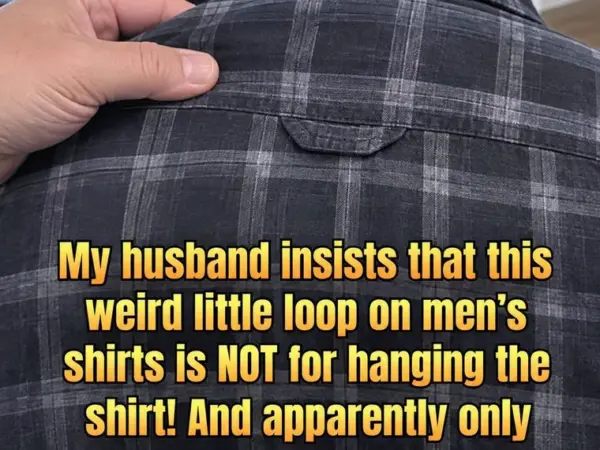
The Little Loop on the Back of Your Shirt Has a Surprisingly Strange History
Have you ever noticed that little strip of fabric sewn onto the back of a button-down shirt?
It looks like a tiny decorative detail—easy to ignore and even easier to forget.
But that simple loop has a surprisingly interesting history.
Known as a locker loop, it was originally designed for a very practical purpose. Over time, however, it became associated with Ivy League style, preppy fashion, and even a quirky campus tradition involving romance.
Yes, that tiny piece of fabric may have once carried a message.
Locker Rooms to Ivy League Style
The locker loop became particularly associated with American collegiate fashion.
By the mid-20th century, button-down shirts featuring the loop were becoming part of the polished Ivy League and preppy aesthetic.
What had started as a functional detail was becoming a recognizable part of a particular style.
The loopsn’t just useful anymore.
It was fashionable.
And then an unusual story began to grow around it.
Did the Loop Really Reveal Your Relationship Status?
According to a long-standing piece of campus lore, the locker loop supposedly became a subtle way for students to communicate their
romantic status.
The story goes something like this:
An intact loop meant you were single.
A loop that had been deliberately torn off supposedly signaled that the wearer was already in a relationship.
And therewas an even more dramatic version of the story.
A student might supposedly remove the loop—or have it torn off by a romantic partner—as a public sign that they were no longer available.
It’s a wonderfully strange piece of fashion folklore.
But there’s an important caveat: the tradition was never universal or consistently documented.
Its meaning appears to have varied between campuses and social groups,
and much of what we hear today survives as college lore rather than a firmly established rule.
Still, thewas an even more dramatic version of the story.
A student might supposedly remove the loop—or have it torn off by a romantic partner—as a public sign that they were no longer available.
It’s a wonderfully strange piece of fashion folklore.
But there’s an important caveat: the tradition was never universal or consistently documented.
Its meaning appears to have varied between campuses and social groups,
and much of what we hear today survives as college lore rather than a firmly established rule.
story helped give this otherwise ordinary piece of fabric a much more interesting identity.
Why Did the Loop Survive?
Fashion trends come and go, so why did such a small feature stick around?
Partly because it remained useful.
Partly because people became accustomed to seeing it.
And partly because it became associated with classic button-down shirts and traditional American style.
Once a practical feature becomes part of a recognizable design, removing it can almost feel like removing part of the garment’s