How to Help Your Snake Plant Bloom
Real, practical steps to encourage those rare, gorgeous flowers
Snake plants are famous for being tough and easy to care for — but getting them to flower indoors? That can feel like a mystery mission.
While many snake plant owners never see blooms, there are conditions that make flowering more likely. Below, you’ll find clear, actionable strategies that you can apply to give your plant the best chance of producing its striking, fragrant flowers.
🌞 1. Give It Bright, Indirect Light
Snake plants tolerate low light, but blooming requires brighter conditions. Light is one of the strongest signals plants use to decide whether to grow leaves or make flowers.
- Place your snake plant near a south- or east-facing window if possible.
- Aim for bright but filtered light — direct sun can scorch the foliage.
- If natural light is limited, consider using a grow light on a timer for consistent brightness.
- Try for at least 8–12 hours of bright, indirect light per day.
Good light helps your plant produce the energy it needs to shift from growing leaves to flowering.
🌵 2. Let the Soil Dry Out Between Waterings
Unlike many houseplants, snake plants come from arid climates. Overwatering can easily keep them too comfortable — and that comfort discourages flowering.
To mimic their natural rhythm:
- Water only when the soil is completely dry.
- In warmer months, this might mean watering every few weeks; in winter, much less often.
- Avoid water sitting on the leaves, which can invite rot.
- Allowing occasional dry stress encourages your plant’s internal bloom mechanisms.
Remember: dry signals can be good for this species — you don’t want a soggy pot.
🌡️ 3. Maintain Warm, Stable Temperatures
Snake plants like warmth, and consistent temperatures help them thrive — and possibly bloom.
- Keep your plant in temperatures around 70–90°F (21–32°C) during the day.
- Avoid cold drafts or areas near air conditioners.
- While slight temperature variation between day and night can simulate natural seasons, avoid extremes.
Some growers find that letting their plants experience mild seasonal shifts (cooler nights in winter, warmer days in spring) supports their flowering rhythm.
🌱 4. Let It Become Slightly Root-Bound
Young or rapidly expanding snake plants tend to focus on leaf growth, not flowers. A subtle stress signal — like being slightly restricted by the pot — can trigger a reproductive response.
- Avoid frequent repotting.
- Only move up to a slightly larger pot once the roots are clearly circling the bottom (when the plant is mature).
- Root-bound conditions can make your snake plant think it’s time to reproduce (i.e., flower).
That said, don’t let it get too cramped — extreme root binding can harm overall health.
🧪 5. Fertilize Sparingly and Smartly
Feeding your plant shouldn’t be aggressive; too much fertilizer pops leaves, not blossoms.
Use a balanced, mild fertilizer:
- Apply during the active growing season (spring and summer).
- Choose a balanced mix like 10-10-10 and dilute it to half strength.
- Limit feeding to once a month or less — snake plants are low feeders.
Overfertilizing pushes lush foliage growth — and that can distract your plant from flowering.
🕰️ 6. Be Patient — Really Patient
This might be the part you least want to hear: flowering doesn’t happen fast.
Most snake plants won’t bud until they’re at least a couple of years old, and even then, blooms can be sporadic or rare. Some plants never flower indoors — and that’s normal.
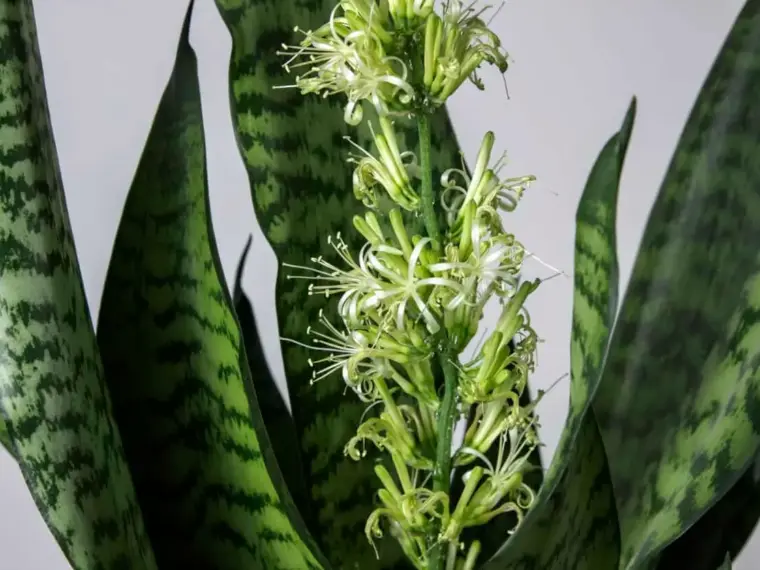
When it does happen, you’ll often see a spike emerge from the center of the plant, carrying clusters of small, fragrant blooms.
🪴 Extra Tips for Success
Here’s a quick checklist to improve your odds:
✔ Provide consistent light every day.
✔ Keep watering minimal and change with the seasons.
✔ Avoid constant repotting — patience pays off.
✔ Don’t stress too hard trying to force blooms — plants need steady conditions.
✔ Enjoy the leaves even if it never flowers — snake plants are beautiful either way!
🌟 Final Thoughts
Encouraging your snake plant to flower is a blend of patience and thoughtful care. While blooms aren’t guaranteed, setting up the right environment — bright light, proper watering, warm temperatures, and thoughtful fertilizer — gives your plant the signals it needs to potentially enter bloom mode.
Even if your plant never flowers, you’ll have a healthy, vibrant houseplant that enhances your space — and that’s something worth celebrating too.
📣 Your Turn!
Have you ever seen your snake plant bloom? Share your experiences in the comments or on social media! If this article helped you, save it for your plant care routine and tag a friend who’s trying to get their snake plant to bloom too.
🌿 Ready to take your indoor gardening to the next level? Start with one change today — maybe adjust the light or tweak your watering schedule — and watch what happens!