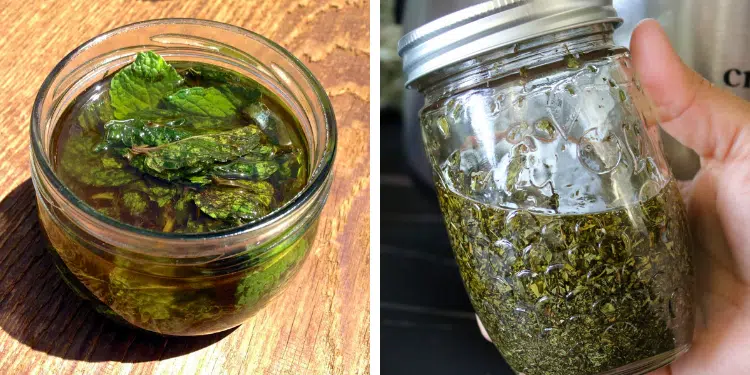
- 1 cup fresh peppermint leaves (or ½ cup dried)
- 1–1½ cups carrier oil
- A clean glass jar with lid
- A strainer or cheesecloth
- Dark glass bottle for storage
Step-by-Step Instructions:
Step 1: Prepare the Peppermint Leaves
Wash fresh leaves thoroughly. Pat completely dry – moisture can cause mold. Bruise the leaves gently with your fingers to release their oils.
Step 2: Pack the Jar
Fill the jar loosely with peppermint leaves.
Step 3: Add Carrier Oil
Pour your chosen carrier oil over the leaves until they’re fully submerged. Leave a small air gap at the top.
Step 4: Seal and Shake
Seal the jar tightly, shake well to distribute the herbs.
Step 5: Let It Infuse
Place the jar in a cool, dark place for 2–3 weeks. Shake every 1–2 days to strengthen the infusion.
Step 6: Strain and Bottle
After 2–3 weeks, strain through cheesecloth into a clean bowl. Transfer the oil into a dark glass bottle to protect it from light. This oil will last 6–12 months when stored properly.
Method 2: Warm-Infused Peppermint Oil (Ready in 2–3 Hours)
This method is perfect when you want peppermint oil quickly.
What You Need:
- Peppermint leaves (fresh or dried)
- Carrier oil
- Small saucepan or double boiler
- Strainer or cheesecloth
- Glass jar or bottle
Step-by-Step:
Step 1: Crush the Leaves
Bruise the peppermint leaves to release their natural oils.
Step 2: Add Oil
Place leaves in a small saucepan and cover with carrier oil.
Step 3: Heat Gently
Warm on the lowest heat setting for 2–3 hours. Do NOT boil – overheating destroys the menthol.
Step 4: Cool and Strain
Let the mixture cool to room temperature. Strain into a bottle and store. Warm-infused oil lasts 4–6 months.
Why Homemade Peppermint Oil Is Better Than Store-Bought
Making your own oil gives you full control over:
Purity
No additives or artificial fragrances.
Freshness
Homemade oil captures the real scent of peppermint leaves.
Strength
You can adjust the concentration based on how many leaves you use.
Cost
Store-bought essential oils are expensive — homemade infusion is affordable.
Safety
Homemade peppermint oil is gentler than essential oils, making it ideal for headaches and nausea relief.
Top Benefits of Peppermint Oil for Headaches & Nausea
1. Provides Fast Relief for Tension Headaches
Applying peppermint oil to the temples or forehead relaxes muscles and gives instant cooling relief.
2. Helps Reduce Migraine Symptoms
For many people, peppermint helps reduce intensity by stimulating cold receptors and improving circulation.
3. Relieves Motion Sickness and Nausea
The scent calms the stomach almost immediately. Perfect for car sickness, plane travel, or dizziness.
4. Eases Sinus Pressure
Peppermint’s menthol opens airways and supports easier breathing.
5. Supports Digestion and Reduces Gas
Applying peppermint oil to the abdomen helps calm digestive spasms.
6. Reduces Stress and Mental Fatigue
Peppermint is naturally uplifting and refreshing – it helps clear the mind and support focus.
7. Freshens the Air and Purifies Your Space
It has natural antimicrobial properties and leaves your home smelling clean.
How to Use Peppermint Oil for Headaches & Nausea
Apply to the Temples
Rub 1–2 drops on the temples and massage gently.
Apply to the Back of the Neck
Helps reduce tension and muscle tightness that cause headaches.
Inhale from the Bottle
Smelling peppermint oil can stop nausea within minutes.
Add to a Diffuser
Perfect for nausea, sinus pressure, or stress relief.
Dab on Wrist or Collar
Provides continuous aromatherapy throughout the day.
Rub on the Belly
Dilute and rub in a circular motion to calm digestion.
Safety Tips: Using Peppermint Oil Correctly
- Always do a patch test if you have sensitive skin.
- Avoid using essential-oil strength peppermint on small children.
- Keep away from eyes.
- Dilute with a carrier oil for topical use.
- Avoid if pregnant without consulting a doctor (mild peppermint is usually fine, but caution is best).
Homemade infused peppermint oil is much gentler than essential oil and safer for most people.
How to Store Your Peppermint Oil
Store in:
- A dark glass bottle
- A cool, dry cabinet
- Away from sunlight or heat
Properly stored peppermint oil lasts:
- Cold-infusion: 6–12 months
- Warm-infusion: 4–6 months
The scent will deepen over time.
Peppermint oil is one of the easiest and most powerful natural remedies you can make at home.
With just peppermint leaves and a simple carrier oil, you can create a soothing, refreshing, therapeutic infusion that helps relieve headaches, calm nausea, ease digestion, reduce stress, and support respiratory comfort.