Hydrangeas are among the most valuable ornamental shrubs in modern landscape design. Known for their large, colorful blooms and lush foliage, hydrangeas can transform any garden into a vibrant focal point. However, to achieve those stunning flowers, proper seasonal care is essential.
March is a critical month for hydrangea maintenance because it marks the transition between winter dormancy and active spring growth. Performing the right tasks now helps improve plant health, flower production, and overall landscape beauty.
Below are the most important hydrangea care practices professional gardeners recommend for early spring.
🌿 1. Identify Your Hydrangea Variety
Before pruning or fertilizing, it’s important to determine the type of hydrangea you have, since different varieties bloom on different wood.
ADVERTISEMENT
Common types include:

Understanding this distinction prevents accidentally removing flower buds before the growing season begins.
✂️ 2. Perform Strategic Pruning
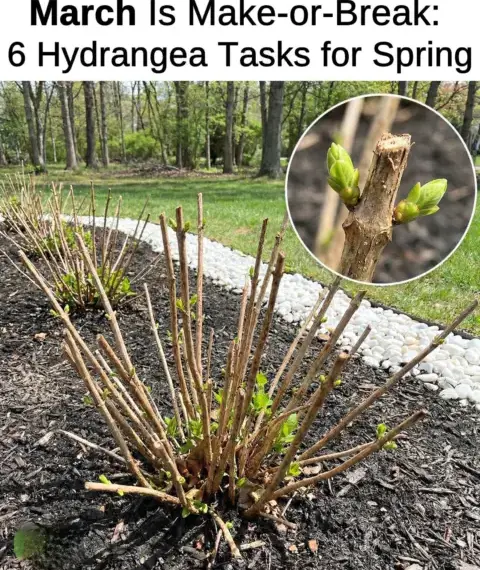
March is the perfect time to remove winter-damaged or weak branches.
Professional pruning practices include:
ADVERTISEMENT
- Removing dead or brittle stems
- Cutting damaged wood back to healthy nodes
- Opening the plant canopy for better air circulation
For hydrangeas that bloom on new wood, pruning can also help encourage stronger stems and larger flower clusters.
🌱 3. Refresh the Soil with Organic Matter
Healthy soil is the foundation of vigorous hydrangea growth.
In early spring, enrich the soil with:
- Compost
- Aged manure
- Organic mulch
- Leaf mold
These materials improve soil structure, moisture retention, and microbial activity, which are essential for root health.
ADVERTISEMENT
🌼 4. Apply a Balanced Slow-Release Fertilizer
Hydrangeas benefit from early-season nutrients that support leaf and flower development.
A balanced fertilizer with nutrients such as:
- Nitrogen (N)
- Phosphorus (P)
- Potassium (K)
helps stimulate healthy plant growth and strong bloom formation.
Organic fertilizers are often preferred by gardeners practicing sustainable landscaping techniques.
ADVERTISEMENT
💧 5. Check Irrigation and Moisture Levels
Hydrangeas require consistent soil moisture, especially as temperatures begin to rise.
March is the ideal time to:
- Inspect irrigation systems
- Improve drainage if needed
- Add mulch to reduce moisture loss
Mulching also helps stabilize soil temperature and reduce weed growth.
🌿 6. Protect New Growth from Late Frost
ADVERTISEMENT
In cooler climates, early spring frost can damage emerging hydrangea buds.
Gardeners can protect plants by:
- Covering shrubs during cold nights
- Using frost cloths
- Maintaining mulch around the base
This simple step protects developing buds that will later produce spring and summer blooms.
🌸 7. Shape the Plant for Landscape Appeal
Hydrangeas can grow large and uneven without occasional shaping.
ADVERTISEMENT
Light shaping helps:
- Maintain balanced structure
- Improve airflow through the plant
- Enhance the visual appeal of garden beds
Landscape designers often integrate hydrangeas into ornamental garden layouts and outdoor living spaces.
🌿 Final Thoughts
March hydrangea care sets the stage for a spectacular flowering season. By performing key tasks such as pruning, fertilizing, improving soil health, and protecting new growth, gardeners can ensure their plants produce abundant blooms throughout the year.
Whether you are managing a home garden or designing a professional landscape, early spring maintenance is one of the most important steps for keeping hydrangeas healthy and vibrant.
ADVERTISEMENT
⚠️ Gardening Disclaimer:
Results may vary depending on climate, soil type, and hydrangea variety. Always adapt gardening techniques to your local growing conditions.