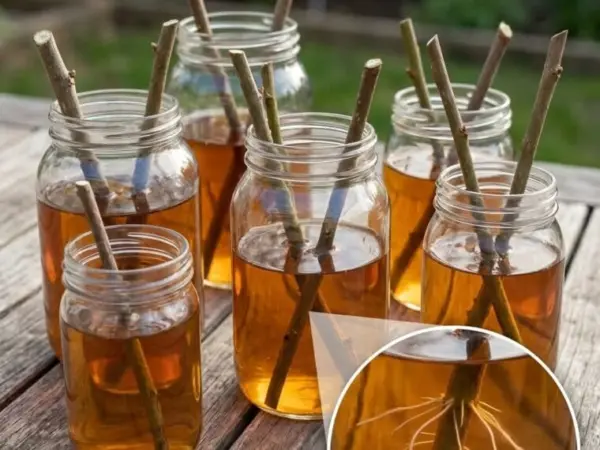
Natural rooting solutions work surprisingly well, and you probably have everything you need already at home. Let me walk you through each option so you can choose what works best for your situation.
Aloe Vera Dip: The Growth Hormone Method
Cut open a fresh aloe leaf and scrape out the clear gel inside. Dip the cut end of your cutting directly into this gel before planting. The gel contains natural auxins (plant growth hormones) that encourage root development. Works especially well for woody stem cuttings like rosemary, lavender, and roses.
Honey Dip: The Infection Fighter
Mix 1 tablespoon of honey into 2 cups of warm water until dissolved. Dip your cutting ends and let them sit for 30 seconds before planting. Honey won’t supercharge root growth, but it absolutely prevents rot and fungal infections that kill cuttings before they ever get a chance to root. Think of it like putting antibiotic ointment on a cut—it protects while healing happens naturally.
Comfrey Tea Spray: The Slow But Steady Option
Steep 1 cup of dried comfrey leaves in 4 cups of boiling water for 24 hours. Strain it well and pour into a spray bottle. Mist your cuttings and the soil surface every 2-3 days. The allantoin in comfrey promotes cell division and root tissue development. This method takes patience—expect results in 3-4 weeks rather than 10-14 days.
Apple Cider Vinegar Dip: The Science-Backed Choice
Mix 3 tablespoons of apple cider vinegar into 1 gallon of water. Dip cutting ends for 5-10 seconds before planting. The acetic acid stimulates root cell development without the harshness of synthetic hormones. I’ve had excellent success with this method on pothos, philodendron, and begonia cuttings.
Here’s What Actually Matters Most
Honestly? The rooting medium and environmental conditions matter more than any dip or spray. You can use the fanciest rooting solution in the world, but if your cutting is sitting in soggy soil or gets zero humidity, it’ll fail.
Keep your cuttings in bright indirect light, maintain soil moisture without waterlogging, and create humidity by covering with a clear plastic bag (remove it for 10 minutes daily for air circulation). Temperature matters too—most cuttings root best between 65-75°F.
The Real Truth About Rooting Solutions
Many cuttings root perfectly fine in plain water or moist soil with zero additives. Pothos, spider plants, and tradescantia laugh at rooting hormone because they’re just that easy. But for stubborn plants like fiddle leaf figs, gardenias, or woody herbs, these natural solutions give you a genuine advantage.
What’s been your biggest challenge with propagating cuttings—getting them to root in the first place, or keeping them alive long enough to develop roots?