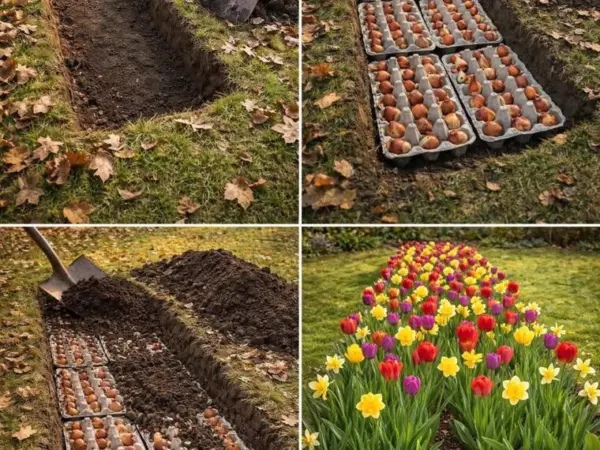
Planting bulbs in straight, evenly spaced rows can be time‑consuming and surprisingly difficult to keep consistent. One practical solution is using recycled egg cartons as a planting guide inside a trench. This method is simple, low‑cost, environmentally friendly, and especially useful when planting dozens—or even hundreds—of bulbs at once.
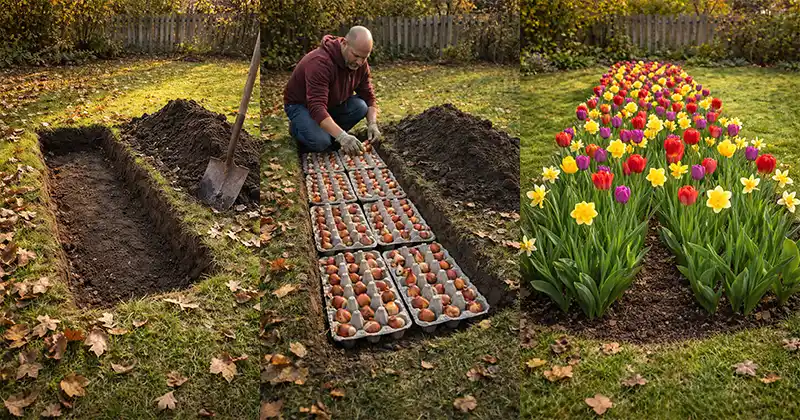
Below is a complete guide to how the method works, which bulbs are best suited for it, and how to maximize your chances of strong, healthy blooms.
How the Egg Carton Trench Method Works
The idea is to combine two helpful tools:
- A shallow trench for uniform planting depth
- Cardboard egg cartons for perfect spacing and organization
The cartons act as biodegradable planting trays. They separate bulbs evenly, prevent rolling or shifting, and slowly break down in the soil, adding small amounts of organic material.
Basic Process
- Dig a straight trench at the correct depth for your bulbs.
- Place empty cardboard egg cartons in the bottom of the trench.
- Set one bulb into each cup, pointed end up.
- Cover everything with soil.
- Water thoroughly.
This creates neat rows, consistent spacing, and excellent root development conditions.
Advantages of This Method
- Perfect spacing – no guessing or measuring
- Uniform depth – bulbs emerge evenly
- Faster planting – ideal for large areas
- Eco‑friendly – cartons decompose naturally
- Reduced bulb damage – bulbs stay upright and stable
- Cleaner layout – visually organized garden beds
Most Common Bulbs That Work Well With This Method
Almost any medium or small flowering bulb can be planted this way. The following are especially suitable:
Spring‑Blooming Bulbs
- Tulips – classic choice, thrive with even spacing
- Daffodils (Narcissus) – hardy and long‑lived
- Crocus – small bulbs, perfect for cartons
- Hyacinths – fragrant and compact
- Grape hyacinths (Muscari)
- Snowdrops (Galanthus)
- Scilla (Siberian squill)
- Anemone blanda
- Iris reticulata
Summer‑Blooming Bulbs
- Gladiolus
- Freesia
- Ranunculus
- Ixias
- Dwarf lilies
Large bulbs such as giant alliums or big decorative lilies may require deeper planting and wider spacing, so they are better planted individually.
Choosing the Right Egg Cartons
Use only:
- Plain cardboard or recycled paper cartons
- Uncoated and non‑plastic
Avoid:
- Styrofoam cartons
- Plastic containers
- Wax‑coated cartons
You can poke small holes in the bottom of each cup to improve drainage, but this is optional.
Ideal Planting Depth Guide
A general rule:
Plant bulbs at a depth of 2–3 times their height.
Examples:
- Tulips & daffodils: 12–15 cm
- Crocus & muscari: 6–8 cm
- Hyacinths: 10–12 cm
Dig the trench accordingly before placing the cartons.
Tips for Successful Growth
1. Use Healthy Bulbs Only
Choose bulbs that are:
- Firm
- Mold‑free
- Not soft or shriveled
Weak bulbs produce weak flowers.
2. Plant at the Right Time
- Spring flowers → plant in autumn
- Summer flowers → plant in spring after frost
Cold‑season bulbs need winter chilling to bloom properly.
3. Improve Soil Quality
Mix into the soil:
- Compost
- Well‑rotted manure
- Leaf mold
Good drainage is essential. Bulbs rot easily in soggy soil.
4. Position Bulbs Correctly
Always place bulbs:
- Pointed end upward
- Flat or root end downward
If unsure, plant sideways—bulbs can self‑correct.
5. Water Thoroughly After Planting
Water deeply once after covering the trench. This:
- Settles soil around roots
- Removes air pockets
- Activates root growth
Avoid constant watering during winter unless the soil becomes very dry.
6. Mulch for Protection
Add a light layer of:
- Straw
- Dry leaves
- Wood chips
This stabilizes temperature and prevents soil erosion.
7. Avoid Fertilizing Too Early
Apply bulb fertilizer or compost:
- At planting time (lightly)
- Or in early spring when shoots appear
Too much nitrogen encourages leaves instead of flowers.
8. Leave Foliage After Blooming
Do not cut green leaves immediately.
They feed the bulb for next year’s bloom. Remove leaves only after they turn yellow and dry.
Common Mistakes to Avoid
- Planting too shallow
- Using plastic cartons
- Overwatering in winter
- Planting damaged bulbs
- Heavy clay soil without drainage
The egg carton trench method is an efficient, beginner‑friendly way to plant large numbers of bulbs neatly and reliably. It saves time, improves spacing accuracy, and produces uniform, professional‑looking flower beds with minimal effort.
Whether planting tulips, daffodils, crocuses, or summer bloomers, this technique offers a practical blend of simplicity and effectiveness—perfect for home gardeners who want beautiful results without complicated tools or measurements.
With good bulbs, proper depth, and healthy soil, this method can deliver dense, colorful blooms year after year.
Inspired by this? Share the article with your friends!