Roses are one of the most valuable plants in ornamental landscaping. Their elegant blooms and fragrance make them a centerpiece in many gardens. However, producing vibrant flowers and strong growth requires proper seasonal maintenance, especially in early spring.
March is a critical month for rose care because plants begin transitioning from winter dormancy to active growth. Completing a few essential tasks now can dramatically improve plant health, flowering performance, and overall garden appearance.
Below are seven important rose care steps professional gardeners and landscape experts recommend for early spring.
✂️ 1. Prune Dead and Damaged Branches
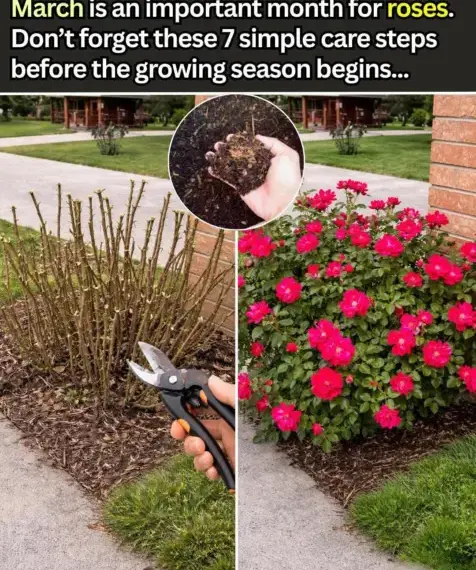
Pruning is one of the most important rose maintenance tasks in early spring.
ADVERTISEMENT
Removing dead or damaged stems helps:
- Stimulate new growth
- Improve air circulation
- Prevent fungal disease
Use sharp pruning shears or garden pruners to cut back weak stems and shape the plant. Professional gardeners typically prune just above outward-facing buds to encourage balanced growth.
🌿 2. Clean Around the Base of the Plant
Winter often leaves behind fallen leaves and debris around rose bushes. These materials can harbor pests and plant diseases.
Clear away:
ADVERTISEMENT
- Old leaves
- Dead stems
- Mulch that has compacted
Cleaning the base improves soil health and reduces the risk of fungal infections and insect infestations.
🌱 3. Improve Soil with Organic Compost
Healthy soil is the foundation of strong rose growth.
Adding organic materials such as:
- Compost
- Aged manure
- Organic soil conditioners
helps increase soil fertility and microbial activity. Roses thrive in nutrient-rich, well-drained soil, making this step essential for long-term garden success.
ADVERTISEMENT
🌼 4. Apply a Balanced Rose Fertilizer
Early spring fertilization supports strong stem development and abundant flower production.
A balanced fertilizer containing:
- Nitrogen
- Phosphorus
- Potassium
helps stimulate root growth and healthy foliage.
Slow-release fertilizers are often recommended because they provide consistent nutrient delivery throughout the growing season.
ADVERTISEMENT
💧 5. Check Irrigation and Watering Systems
As temperatures begin to rise, roses require consistent moisture to support new growth.
Inspect watering systems and ensure plants receive:
- Deep watering
- Good drainage
- Even moisture distribution
Drip irrigation systems are often used in professional gardens because they deliver water efficiently while minimizing disease risk.
🐞 6. Monitor Early Pest Activity
ADVERTISEMENT
Early spring is when many garden pests begin to appear.
Common rose pests include:
- Aphids
- Spider mites
- Rose sawflies
Regular inspections allow gardeners to respond quickly with integrated pest management techniques, preventing infestations before they spread.
🌹 7. Refresh Mulch for Moisture Retention
Mulching roses helps regulate soil temperature and retain moisture.
ADVERTISEMENT
Organic mulch materials include:
- Bark chips
- Straw
- Compost
- Leaf mulch
Mulch also helps suppress weeds and protect root systems during seasonal temperature fluctuations.
🌿 Final Thoughts
March rose care is one of the most important steps in achieving a vibrant, healthy rose garden. By focusing on strategic pruning, soil enrichment, fertilization, and pest prevention, gardeners can ensure their plants produce strong growth and stunning blooms throughout the season.
With proper maintenance, rose bushes can thrive for many years and remain one of the most rewarding plants in any landscape.
ADVERTISEMENT
⚠️ Gardening Disclaimer:
Results may vary depending on climate, soil type, and rose variety. Always adjust gardening practices to local conditions.