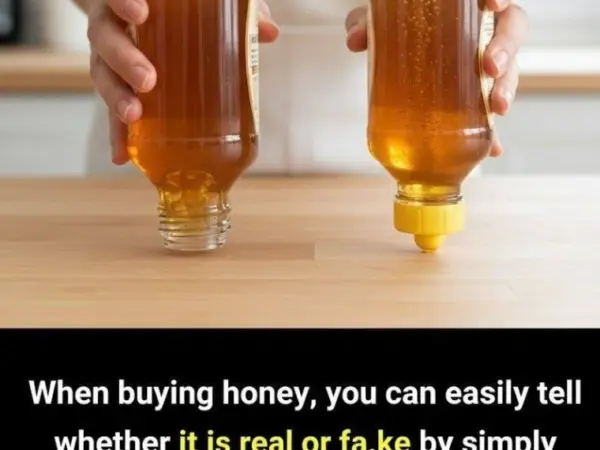
Turn the honey bottle upside down. If it flows slowly, it’s real. If it pours like water, it’s fake.”
It sounds simple. Trustworthy. Almost too good to be true.
And that’s the problem.
While pure honey is thick and slow-moving, the “bottle flip” test is unreliable—and can easily fool you. Temperature, bottle shape, and even added thickeners can trick your eyes.
In fact, many fake honeys are deliberately adulterated with corn syrup, rice syrup, or sugar water—then thickened with gums or gels to mimic real honey’s texture.
So how can you tell what’s real?
In this guide, you’ll discover:
Why the bottle flip test fails (with science)
5 reliable, at-home tests that actually work
What to look for on the label (and what to avoid)
How to buy honey you can trust—every time
Because “liquid gold” should be exactly that—not liquid corn syrup.
Why the “Bottle Flip” Test Is Flawed
It Ignores Temperature
Cold honey (even fake) becomes thick and slow
Warm honey (even real) flows more freely
→ A bottle stored in a warm kitchen may “fail” the test—even if it’s 100% pure
It Doesn’t Detect Clever Adulteration
Food fraudsters know this trick. Many fake honeys contain:
High-fructose corn syrup (HFCS)
Rice syrup or beet sugar
Added thickeners (like guar gum or xanthan gum) to mimic viscosity
These can pass the bottle flip test—but are still not real honey.
Bottle Shape Matters
Narrow necks = slower flow. Wide openings = faster pour.
The test says more about packaging than purity.
Fact: A 2022 study by Food Control found that over 30% of “thick” honeys sold in supermarkets were adulterated—yet passed visual flow tests.
5 Better Ways to Test Honey at Home (That Actually Work)
1. The Water Test
Add 1 tsp honey to a glass of room-temp water
Real honey will sink as a lump and settle at the bottom
Fake honey (sugar-based) will dissolve quickly
Limitation: Doesn’t detect all syrups—but catches obvious fakes
2. The Thumb Test
Place a small drop of honey on your thumb
Real honey stays intact, doesn’t spread or drip
Fake honey is watery and spills easily
Best for: Quick spot-check at the store
3. The Flame Test (Use Caution!)
Dip a dry matchstick into honey, then try to light it
Real honey will burn (it’s low in moisture)
Fake honey won’t ignite (water content is too high)
Safety note: Do this over a sink, away from flammable materials
4. The Paper Test
Drop honey on a paper towel or blotting paper
Real honey won’t soak through (low water content)
Fake honey leaves a wet spot
Works best with unfiltered, raw honey
5. Check the Ingredient List (The #1 Method!)
Real honey should say only: “Honey”
Red flags:
→ “Honey blend”
→ “Corn syrup,” “sugar syrup,” “glucose-fructose”
→ “Natural flavors” or “added thickeners”
Pro tip: Look for “raw,” “unfiltered,” and “single-origin” on the label
How to Buy Real Honey (Trusted Sources)
Buy local: Visit farmers markets or beekeepers—ask about their process
Look for certifications:
→ True Source Honey (ethical & traceable)
→ USDA Organic (though rare—bees forage widely)
Avoid:
→ Ultra-cheap honey ($2–$3 per pound)
→ “Honey” in squeezable plastic bears with no origin info
→ Products labeled “honey-flavored syrup”
Did you know? The U.S. imports over 70% of its honey—much of it is diluted or mislabeled.
Bonus: Why Real Honey Matters
Real honey contains antioxidants, enzymes, and trace nutrients
Fake honey is just empty sugar—spiking blood sugar with no benefits
Supporting real beekeepers helps protect pollinators and ecosystems
Final Thought: Don’t Trust the Flow—Trust the Source
The “bottle flip” might look convincing on social media—but true purity isn’t about performance. It’s about provenance.
So next time you buy honey:
Read the label
Know your source
Use a real test—not a trick
Because your health, your taste buds, and the bees deserve better than sweetened syrup.
Real honey isn’t just thick—it’s honest.
Found this eye-opening?
Save this guide for your next grocery run
Share it with a health-conscious friend or foodie
Comment below: Have you ever been fooled by fake honey?
Disclaimer: Home tests are not 100% foolproof. For absolute certainty, lab testing (like NMR) is required. When in doubt, buy from trusted local beekeepers.