Is It Harmful to Your Lawn?
The good news:
Burrowing crayfish usually do not destroy lawns like moles do.
However, potential issues include:
- Uneven ground from tunnels
- Minor root disturbance
- Mud piles interfering with mowing
In most residential lawns, they are more of a curiosity than a serious pest.
Could It Be Something Else?
Although burrowing crayfish are the most likely cause, similar structures can occasionally be made by:
- Mud dauber wasps (but those attach to walls, not lawns)
- Certain ant species (usually smaller and less structured)
- Earthworms (leave castings, not chimneys with holes)
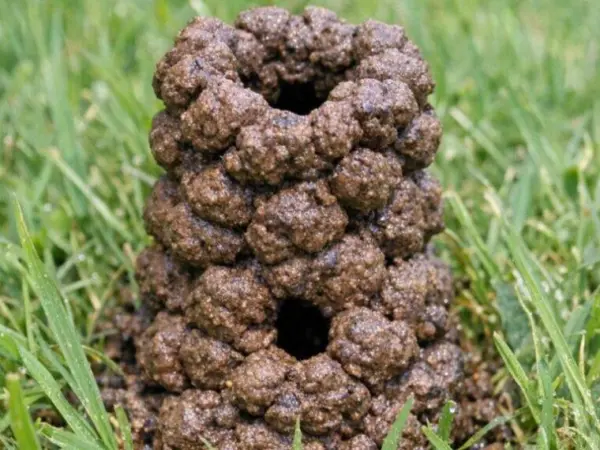
If the structure is:
- Cylindrical
- Made of round mud pellets
- Has a visible central hole
- Appears after rain
…it is almost certainly a crayfish chimney.
What Should You Do?
If you’re not bothered by it, you can leave it alone. The crayfish is part of the natural soil ecosystem.
If removal is necessary:
- Flatten the chimney
- Improve lawn drainage
- Reduce excess moisture
- Avoid overwatering
Chemical control is rarely necessary and often discouraged because crayfish contribute positively to soil health.
A Tiny Architect Beneath Your Feet
What looks like a mysterious mud tower is actually the work of a highly skilled underground engineer.
Next time you see one in your lawn, you’ll know:
There’s a crayfish quietly reshaping the soil below.
Nature is full of surprises — sometimes right in the middle of your yard.