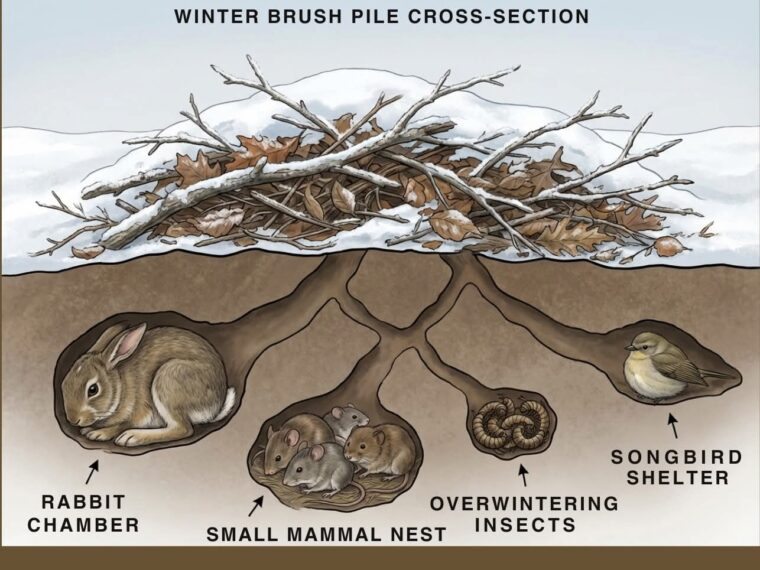
❄️ Why Winter Brush Piles Are Essential
1. Shelter From Predators
In winter, small animals have fewer places to hide. Brush piles provide hiding spots away from hawks, foxes, and neighborhood cats.
2. Protection From the Cold
The layers create:
- wind barriers
- insulation
- pockets of warm air
This can literally save animals’ lives during cold snaps.
3. Safe Space for Overwintering Birds
Small birds such as finches, sparrows, chickadees, and wrens use brush piles for:
- roosting at night
- hiding during storms
- conserving body heat
Without shelter, many birds struggle to survive winter nights.
4. Habitat for Small Mammals
Creatures like rabbits, hedgehogs, chipmunks, squirrels, and field mice rely on brush piles to stay warm and secure.
5. Support for Beneficial Insects
Ladybugs, lacewings, pollinator queens, and beetles overwinter in the lower layers, emerging in spring to help your garden thrive.
🌲 Why You Should Leave Part of Your Garden “Wild”
Modern gardening habits often aim to keep yards perfectly clean—but nature doesn’t work that way.
Leaving even one corner of your garden untouched offers:
- a winter refuge for wildlife
- protection for essential species
- healthier soil
- increased biodiversity
This small act supports the delicate ecosystem right in your backyard.
🛠️ How to Build a Simple Winter Brush Pile
- Choose a quiet corner of your garden.
- Start with thick logs or branches at the base.
- Add medium branches on top.
- Finish with leaves, twigs, and smaller brush.
- Avoid compressing it — animals need space inside.
- Leave it in place until spring.
In just a few minutes, you create a lifesaving refuge.
🌎 A Small Gesture With a Big Impact
When we leave brush piles and natural debris during winter, we protect countless creatures that often go unnoticed.
Under the leaves and branches, life continues, quietly and resiliently.
Your simple act of leaving a “wild corner” can help maintain biodiversity and give vulnerable species a fighting chance during the coldest months.
Nature doesn’t need perfection — it needs space, shelter, and understanding.