1. Identifying the Plant
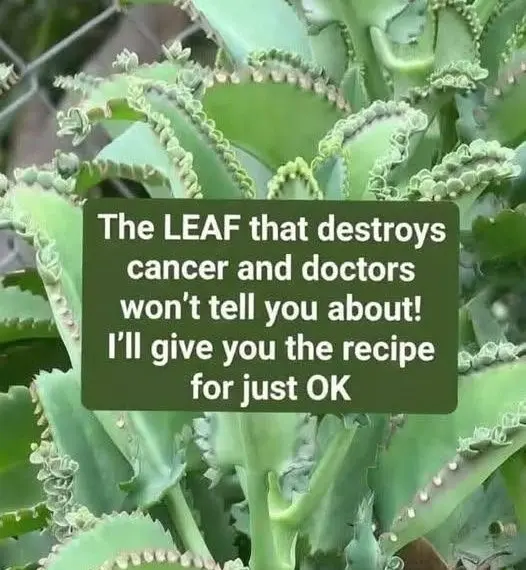
The plant shown in the photograph appears to belong to the Kalanchoe or Bryophyllum family of succulents. It may be the species commonly known as Mother of Thousands (Kalanchoe daigremontiana), although the exact species cannot be confirmed from the photograph alone.
It is recognizable by several distinctive characteristics:
- Thick, fleshy green leaves.
- Small baby plants growing along the edges of the leaves.
- A succulent structure that stores water.
- The ability to reproduce through tiny plantlets that eventually fall off and grow into new plants.
The plant is native to Madagascar and is commonly cultivated as an ornamental plant.
Its unusual reproductive ability explains its popular name, Mother of Thousands.
2. Why Is This Plant Associated With Cancer?
Interest in this plant comes partly from its chemical composition.
Certain Kalanchoe species contain naturally occurring compounds, including:
- Flavonoids.
- Phenolic compounds.
- Bufadienolides.
- Other biologically active plant substances.
Researchers have investigated some of these compounds for their potential antioxidant, anti-inflammatory, and cytotoxic properties.
In particular, certain extracts and isolated compounds have demonstrated effects on cancer cells in laboratory experiments.
However, an important distinction must be made: an extract affecting cancer cells in a laboratory does not mean that eating the plant will destroy tumors inside the human body.
3. What Does Scientific Research Actually Say?
Scientific investigations into Kalanchoe plants have explored several possible biological activities.
A. Antioxidant activity
Some extracts contain compounds that demonstrate antioxidant activity in experimental studies.
Antioxidants are substances that can help neutralize certain unstable molecules known as free radicals.
However, antioxidant activity in laboratory experiments does not establish that a plant prevents or treats cancer.
B. Anti-inflammatory activity
Researchers have also investigated certain Kalanchoe extracts for their potential effects on inflammation.
These findings are interesting, but more research is needed to determine whether they provide meaningful benefits in humans.
C. Experimental anticancer activity
Some laboratory studies have examined the effects of particular Kalanchoe extracts and compounds on cancer-cell growth.
Although some results are promising enough to justify further investigation, these experiments do not establish that the whole plant is an effective cancer treatment.
Human clinical evidence remains insufficient.
4. Why a Laboratory Result Is Not a Cancer Cure
There are several important reasons why laboratory findings cannot automatically be translated into medical treatments.
First: Concentration matters.
A substance may affect cancer cells when researchers expose them to a carefully controlled concentration in a laboratory. The same concentration may not be achievable or safe inside the human body.
Second: The human body is more complex.
The digestive system, liver, kidneys, bloodstream, and other organs influence how substances are absorbed, processed, and eliminated.
Third: Healthy cells matter too.
A substance that damages cancer cells must also be evaluated for its effects on healthy cells and vital organs.
Fourth: Clinical trials are necessary.
Researchers must establish safety, appropriate dosing, effectiveness, and possible interactions before a substance can be recommended as a medical treatment.
For these reasons, the available experimental research does not justify describing Mother of Thousands as a cancer cure.
5. Is It Safe to Prepare a Homemade Remedy?
This is where particular caution is necessary.
Some social media posts recommend crushing the leaves, extracting their juice, preparing herbal teas, or consuming the plant regularly.
However, these recommendations should not be treated as medically established recipes.
Certain Kalanchoe species contain biologically active compounds called bufadienolides. These compounds are a toxicological concern because they can affect the cardiovascular system.
North Carolina State University Extension also warns that Kalanchoe daigremontiana can be toxic to humans and animals if ingested.
Consequently, there is no established safe homemade cancer-treatment dose for this plant.
Important safety advice:
- Do not consume the leaves raw.
- Do not drink homemade extracts or juices.
- Do not prepare concentrated herbal mixtures for cancer treatment.
- Keep the plant away from children and pets.
- Avoid direct contact if you have sensitive skin; protective gloves are advisable.
For these reasons, providing a drinking recipe would be unsafe and medically unjustified.
6. What Should Someone With Cancer Do Instead?
Anyone diagnosed with cancer should receive an individualized treatment plan from a qualified oncology team.
Depending on the cancer type, stage, and patient’s overall condition, evidence-based treatment may include:
- Surgery to remove a tumor when appropriate.
- Chemotherapy to destroy or control cancer cells.
- Radiation therapy to target cancerous tissue.
- Immunotherapy to help the immune system recognize and attack cancer.
- Targeted therapy to act on specific molecular features of cancer cells.
- Hormone therapy for cancers that depend on hormones.
Patients interested in herbal medicine should discuss it with their oncologist before using any plant-based product.
Some herbal substances can interfere with cancer medications or produce unwanted side effects.
Most importantly, no unproven herbal remedy should replace or delay recommended cancer treatment.
7. How to Evaluate Claims About Medicinal Plants
Before believing a viral post about a miraculous plant, follow these steps:
Step 1: Identify the scientific name.
Common plant names can refer to several different species with different chemical compositions.
Step 2: Look for scientific studies.
Check whether the evidence comes from laboratory experiments, animal research, or human clinical trials.
Step 3: Investigate safety.
A naturally occurring substance is not automatically safe to consume.
Step 4: Check whether a safe dose has been established.
Never assume that a traditional preparation or a small quantity is harmless.
Step 5: Consult a qualified healthcare professional.
This is especially important for people receiving chemotherapy, radiation therapy, immunotherapy, or other cancer treatments.
8. Final Thoughts
Mother of Thousands is a fascinating succulent with an unusual ability to produce new plants along the edges of its leaves. Its chemical composition has attracted scientific interest, particularly in laboratory investigations of antioxidant, anti-inflammatory, and cytotoxic activities.
Nevertheless, there is no reliable clinical evidence that consuming this plant cures cancer, shrinks tumors, or replaces established cancer treatments.
The most responsible approach is to appreciate the plant’s potential scientific value without confusing experimental findings with proven medical benefits.
Natural substances may inspire important medical discoveries, but safe and effective treatments must be demonstrated through rigorous scientific research.
Remember: Hope is important, but accurate medical information and timely treatment can save lives.